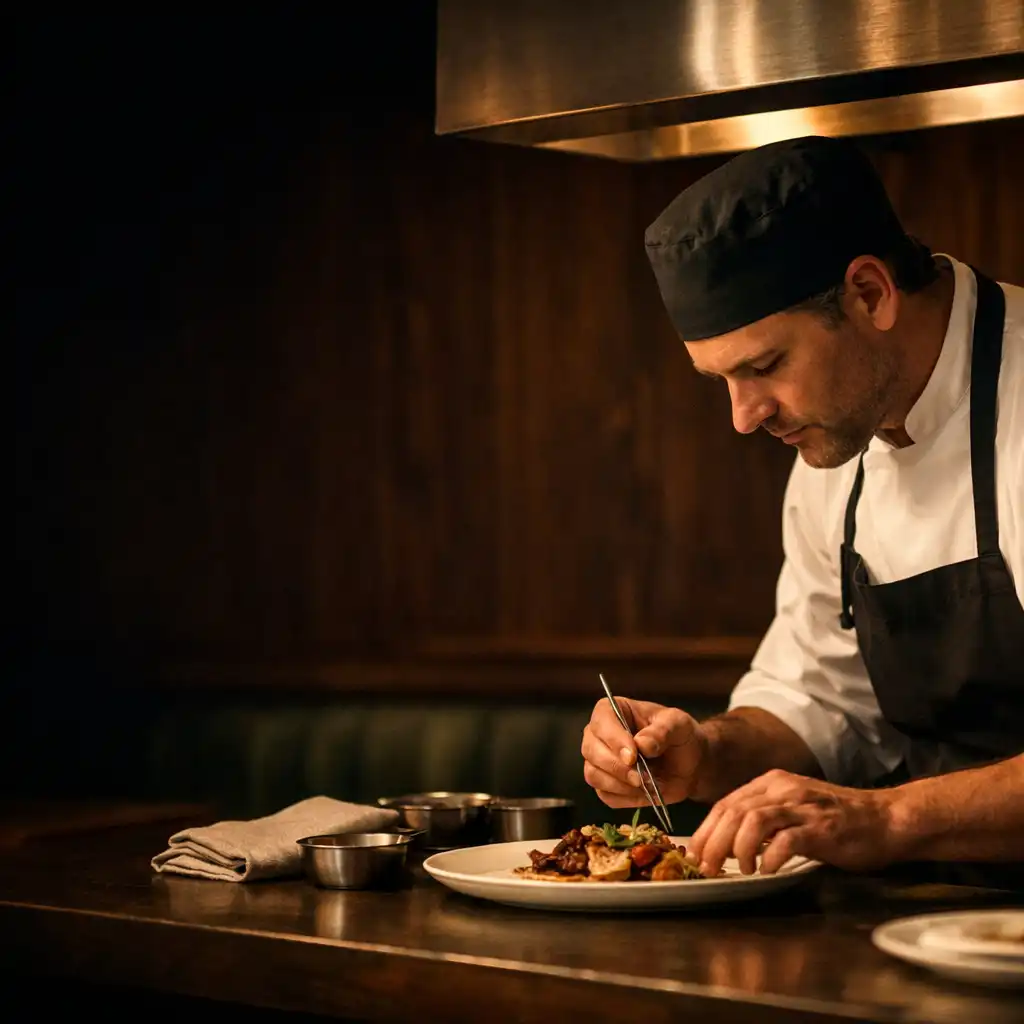
Chef finishing a plated dish at Cedar Zuno's warmly lit restaurant pass

The Cedar Zuno kitchen

Chef-led dining, shaped for the evening

Cedar Zuno’s kitchen is guided by a present, thoughtful culinary point of view: Pacific Northwest ingredients, careful technique, and service paced for a real Vancouver evening. The chef’s attention begins at the pass and carries into the dining room, where a composed meal becomes part of a longer, sophisticated night in a physical dining-club setting.

A kitchen point of view

Food with a clear sense of place

01

Ingredient-led, never overworked

The kitchen begins with the changing character of the Pacific Northwest: produce with freshness, coastal ingredients with clarity, and carefully selected proteins with their own natural weight. Rather than pressing every plate into a fixed cuisine label, the work looks for contrast—brightness beside warmth, smoke beside acidity, and texture that gives each bite definition. The aim is simple: let the season arrive at the table recognizably, with enough restraint for its details to remain present.
02

Technique in service of warmth

Precision is valuable when guests can feel its ease. At Cedar Zuno, calm preparation, measured seasoning, attention to temperature, and finishing details at the pass are all there to make a meal feel generous rather than complicated. Fire, sauce work, and timing are treated as quiet forms of care. The result should reach the table with assurance, leaving diners free to settle into conversation instead of noticing the effort behind the plate.

03

An evening with a natural rhythm

Dinner at Cedar Zuno has an unfolding pace: an arrival, a table that feels settled, considered courses, and room to linger after the final plate. The restaurant remains the centre of that experience, while the venue’s physical lounge offers an adjacent social atmosphere of poker tables, card rooms, roulette, blackjack, casino nights, and tactile chips. It is an in-person setting for an evening to continue at its own pace, never a demand placed on the meal.

The chef’s table

From first light to last course

A memorable dinner is not a rush toward a finish. It is a sequence of small, attentive decisions: how a first impression clears the day away, how the centre of the meal gathers warmth, and how the table is left open for the evening beyond it.

01

Begin with a sense of place

The opening course is imagined as an orientation, not an announcement. Freshness, brightness, and a clear seasonal note meet linen, glassware, and the calm pace of arrival. It gives guests something immediate to notice without asking for too much attention. The first course establishes confidence quietly, inviting a table to relax into the room and into the evening ahead.

02

Build depth at the centre of the meal

At the centre of dinner, warmth, fire, richness, and contrast can gather with more presence. Composed dishes are paced to encourage conversation across the table, generous enough to feel satisfying but controlled enough to preserve curiosity. The kitchen keeps balance in view, so a meal can deepen without becoming heavy and a group can remain engaged with one another as much as with what has arrived.

03

Leave room for the evening to continue

A final course is a soft landing rather than a full stop: a polished closing detail that gives guests reason to linger, talk, and remain present with the people at their table. For those who wish to continue their in-person evening, Cedar Zuno’s elegant physical lounge and hosted tables sit nearby as part of the wider club atmosphere. The dining room keeps its own composed identity, while the night stays open to conversation.

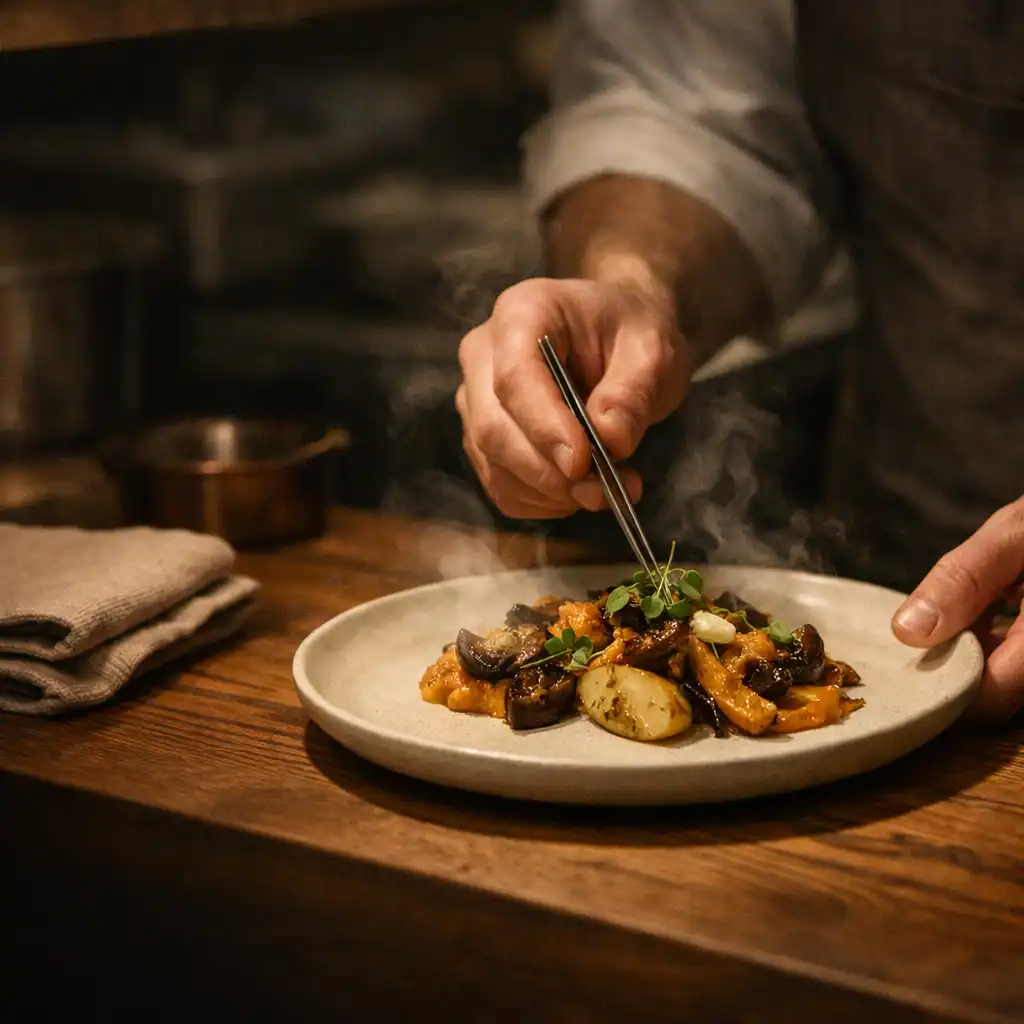
Hands completing a composed plate under warm light at the restaurant kitchen pass

At the pass

Composure before the dining room

The pass is where timing, temperature, plating, and service communication meet before a dish leaves the kitchen. It is a scene of quiet concentration rather than spectacle: hands checking a final detail, a plate held at its intended warmth, and a shared awareness of the table waiting beyond. Every small decision is made so the guest receives the dish at the moment it was meant to arrive.

Clean seasoning, checked with a light hand.

Warm plates that hold a dish with care.

Considered texture in each final detail.

A pace that respects the table.

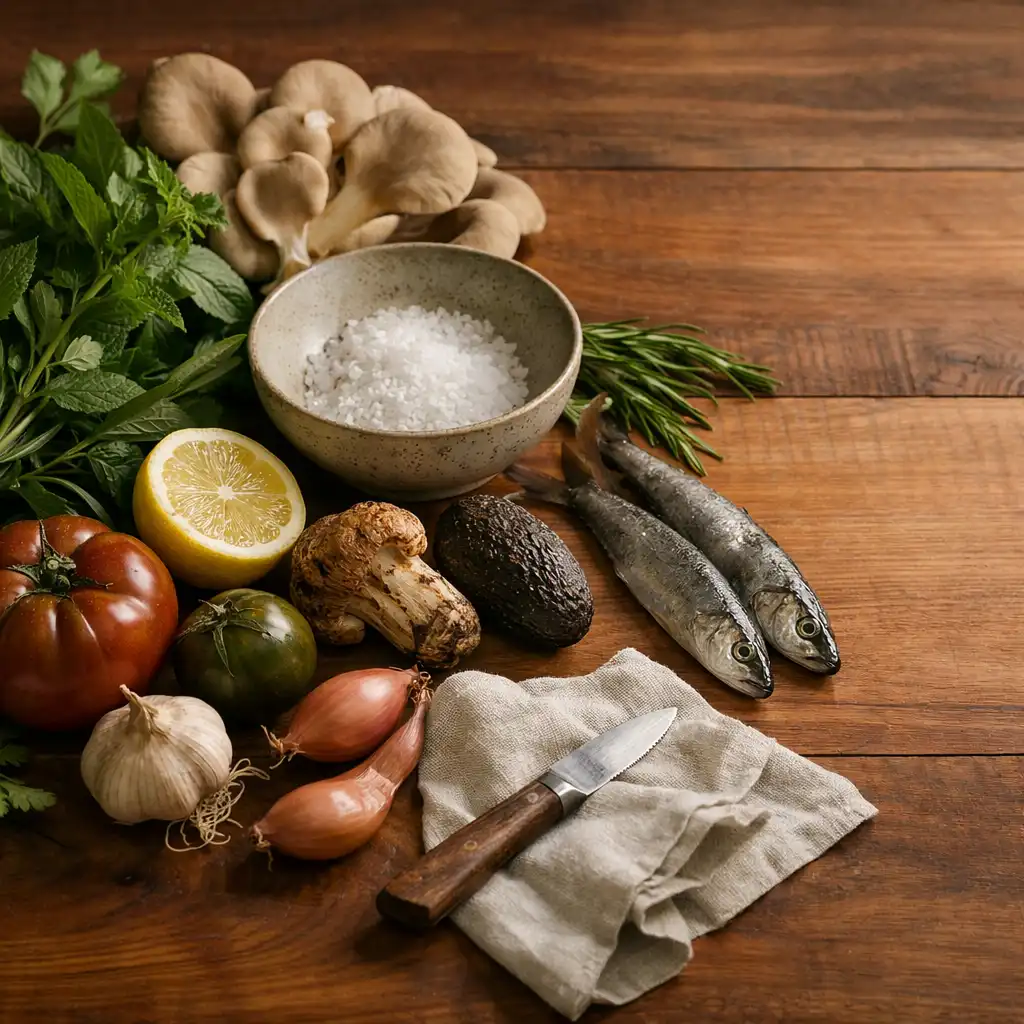
Pacific Northwest ingredients arranged on cedar with linen and ceramic

Seasonal ingredients, held close

A Pacific Northwest pantry

Vancouver’s coastal setting offers a useful way of seeing the pantry: the coast, forests, gardens, and changing weather each suggest a different kind of clarity. Cedar Zuno draws inspiration from that regional character without forcing it into a single gesture. Ingredients are considered for their season, their texture, and the way they can sit naturally within a composed plate—bright when the room needs lift, deeper when the evening calls for warmth.

Spring and summer: lift and brightness

Lighter months invite freshness, herbs, crisp textures, and plates that feel open rather than heavy. As evenings stretch, the table can carry a more relaxed brightness: clean flavours, gentle contrast, and details that leave room for the season’s natural energy.

Autumn and winter: depth and warmth

Cooler months encourage deeper roast, smoke, and richer textures, held with the same restraint. Against dark cedar, cream linen, and low candlelight, the dining room takes on a quieter pace—one suited to warmth, lingering conversation, and a more intimate close to the day.

A room changes the meal

The plate belongs to the room

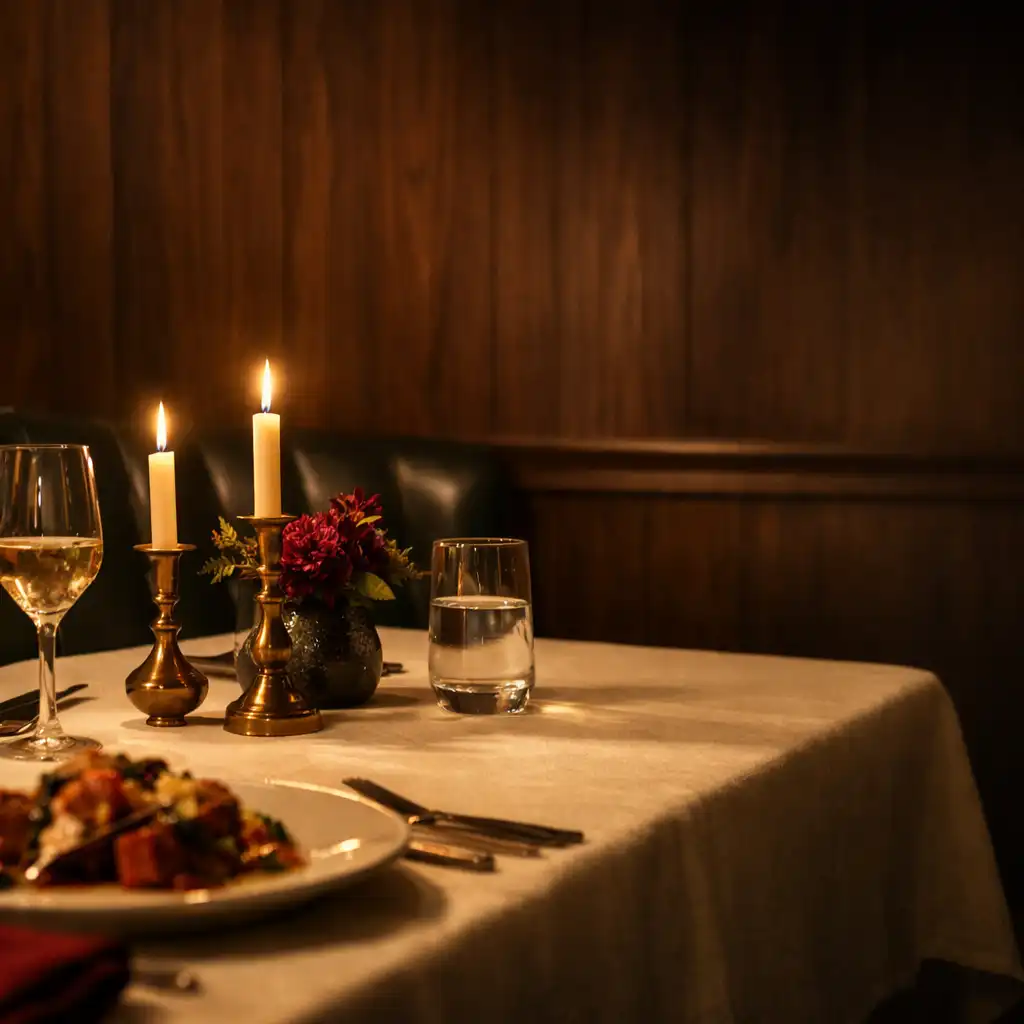
Food is never designed in isolation. It arrives into the warmth of cedar, candlelit cream, forest-green seating, and the measured cadence of a well-held table. Those material details do not compete with the plate; they help create the conditions in which flavour, attention, and conversation can settle together. The chef’s work is to meet that atmosphere with food that feels equally considered, tactile, and welcoming.

Light, linen, and pace

Low, warm light gives a dish presence without making it a performance. Linen, glass, and an attentive rhythm allow guests to notice what is in front of them, then return naturally to the people around them. The room makes space for a meal to be received calmly.

Conversation carries across the table

The kitchen values courses that support a pair, a small group, or a gathering without interrupting its conversation. A refined meal can be memorable while still leaving room for laughter, pauses, and the changing tone of a table as the evening unfolds.

The lounge remains part of the evening

After dinner, guests may continue into Cedar Zuno’s physical lounge environment of hosted tables, cards, chips, and social ritual. Poker tables, card rooms, roulette, blackjack, and casino nights belong to that in-person atmosphere, while the restaurant retains its own composed focus on food and hospitality.

Signature of the kitchen

Details to look for on the menu

Clean structure

Cedar Zuno plates are guided by a clear centre of gravity: one primary ingredient, a thoughtful supporting element, and enough restraint for every component to be understood. That clarity helps guests move through a refined menu with confidence, whether their attention is drawn to produce, coastal character, or a more substantial centre.

Contrast with purpose

Temperature, acidity, texture, and aroma are considered as ways to keep a dish lively through its final bite. The effect is not technical for its own sake. It is a balanced, guest-facing kind of contrast—enough movement to hold interest, while the overall meal remains elegant and settled.

A finish worth lingering over

A final garnish, sauce, or table-ready detail is the quiet completion of the kitchen’s work. It connects the plate back to the pass and to the service moment, intended to feel polished rather than decorative. The close is sensory but restrained: a finishing note that lets the dish remain with the guest.

See the current expression of the kitchen’s seasonal point of view.

View the Menu
Candlelit private dining table with cream linen, cedar details, and forest-green seating

Private dining through the chef’s lens

Gatherings deserve their own pace

Private dining at Cedar Zuno is a considered restaurant occasion shaped around the room, the table, and the natural flow of a group’s evening. For celebrations, hosted dinners, and other gatherings, the chef’s perspective remains centred on culinary coherence: food that suits a refined physical venue, service that supports the occasion, and a table that feels held rather than hurried.

A table with character

The meal may be considered in relation to the occasion, season, room tone, and the way guests wish to gather. The emphasis is not on a fixed format, but on a thoughtful restaurant experience with a clear sense of place.

In-venue evening

A considered handoff to the evening

A private dinner may form the opening chapter of a wider evening at the venue. The physical lounge can remain an optional nearby atmosphere, while the chef’s focus stays where it belongs: on a memorable dining table.

Explore Private Events

Words from the kitchen

The aim is for every guest to feel looked after, surprised in small ways, and free to stay present with the people at their table. The food should carry care without asking to be explained.

Cedar Zuno is a physical Vancouver place for food, conversation, and a well-paced evening. Its dining-club identity brings premium restaurant hospitality alongside an elegant casino lounge setting, while the table remains the destination: a place to arrive, settle in, and share the night.